
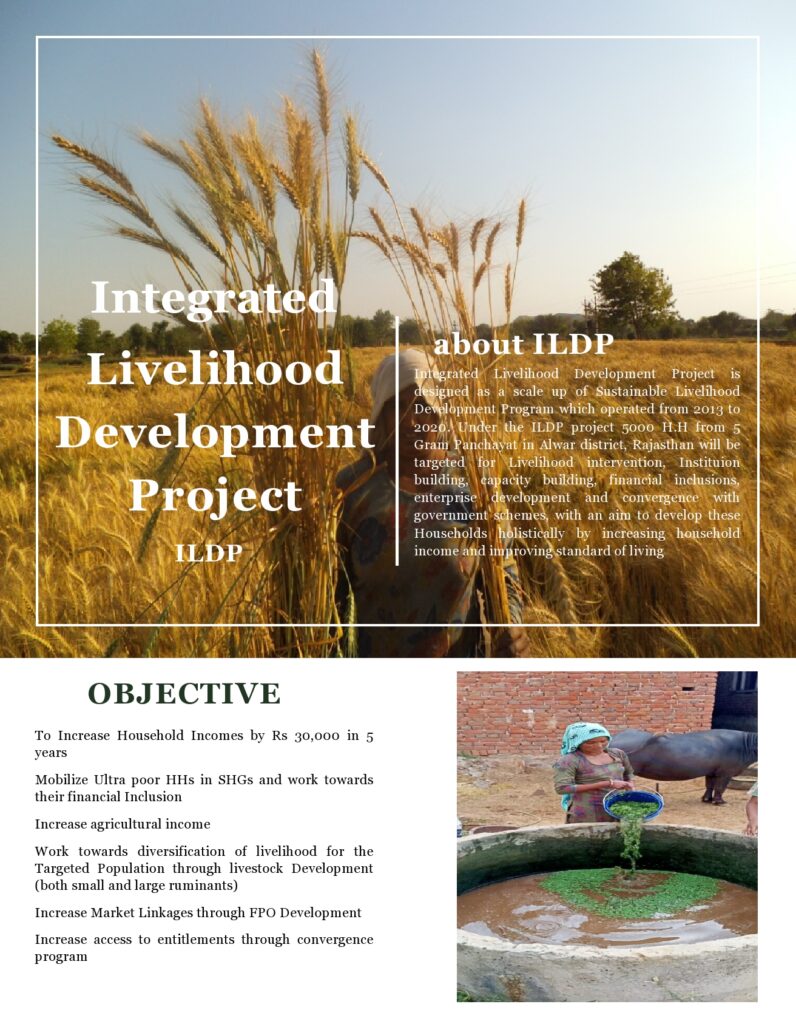
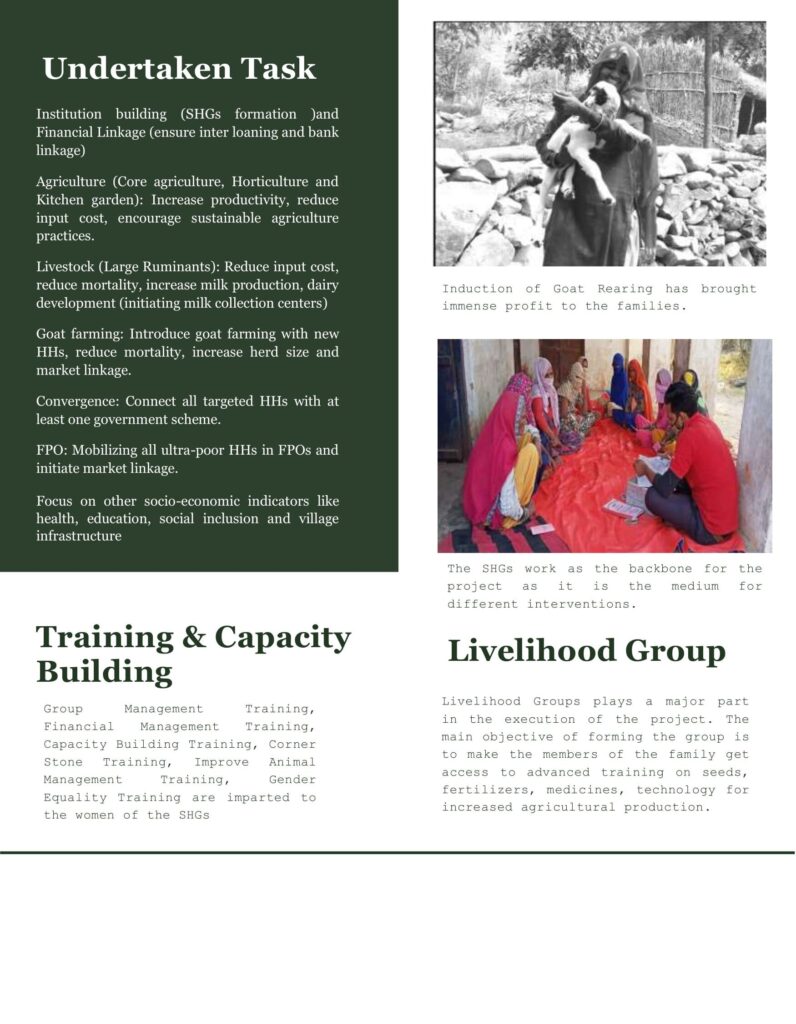
Alwar is a semi-arid region in Rajasthan that has suffered a water crisis owing to water depletion and a decrease in annual rainfall. Despite the fluctuating climatic condition in Rajasthan, agricultural activities have predominantly been practiced in rural areas, offering great opportunities for women to be employed. Studies have shown that Alwar is a region where gender inequality, sexual and gender-based violence is predominant. Due to these social vices, women are denied employment opportunities neither do they acquire land or assets. It has been shown that females constitute about (48.14%) half of the total population in Rajasthan, and they play a significant role in the state of the economy. Around 77% of total rural female workers and 18% of total urban female workers are employed as cultivators and agricultural laborers, where wages are minimum and working conditions are not conducive owing to poor climatic conditions. Rural women are mostly engaged in agriculture and allied works,causing them to easily fulfill their household responsibility. Due to increased urbanization, decreased farmland, and unprecedented climatic changes, marginal farmers are unable to generate income for their families through agriculture. SPECTRA in association with Letz Dream Foundation through Sustainable Livelihood development Program and integrated Livelihood Development Program (ILDP)” in Alwar District of Rajasthan brought a lot of interventions for SHG and their members. We formed 556 SHGs that profited 7320 beneficiaries. These SHGs were subjected to financial programmes, capacity-building sessions, and entrepreneurship activities. Financial activities like savings, inter-loan, and bank linkages were conducted through SHGs. Savings procured were used for the purchase of utility items, livelihood activities, medical expenses, and children’s education. About 94 households were linked to bank accounts as part of this financial scheme. A total of 303 training and capacity-building sessions were organized for SHGs on various themes such as group management, financial management, gender, leadership and business planning, agriculturelivestock, and goat farming. With the help of this training, members of SHGs have established businesses like goat farming, cosmetic shops, and confectionery shop. Alongside Institutional collaborations, camps, kitchen garden, Azolla unit, System of Rice Intensification (SRI), exposure visit, construction and renovation of Water Reserve, and awareness on covid19 were also conducted. Through these activities, the sustainability of SHG is being attained periodically with the help of activities embedded in the livelihood development scheme. Rural women are involved in all training organized by SPECTRA on group management, leadership development, financial management animal management, Azolla and vermicompost establishment, cornerstone,and entrepreneurship development. Through such activities, SHGs receive good profit and these profits are equally distributed among group members. SHG has brought a revolution in such Communities through self-dependence, self-resilience, and self-employment. SHGs are institutions that bring social change in rural areas and have achieved SDG goals like poverty elevation, quality education, sustainable communities, and gender equity. Rural Women establish themselves only depending on their willpower and leading to the empowerment of the women community.

 ]]>
]]>
Women and water have a unique relationship. Women are most influenced when it comes to any issues relating to water. Women are considered responsible for household chores, and thus are often pushed to face the adversities rising in regard to water crisis. It does take great amount of time, energy and money to fulfill the water need of a family, in which women become sole responsible individual to work for its arrangement. At present, Rajasthan is facing a major water crisis and there has been decline in groundwater by 62.70 % in the state as per the study conducted by Central Ground Water Board in 2019.This alarming situation have adversely affected the lives of rural women. They often walk miles and for several hours to fetch water for their families as well as livestock. This greatly influences the health and economic wellbeing of a family, especially women. The location of water supply and irrigation structures often influences lives of women. Thus, it is easier if water Supply is closer to their houses as it allows them to effectively divide their time in between domestic and productive work.
Despite of pivotal relationship between women and water, it is disappointing to see very minimal presence of women in decision making positions regarding Water both at local as well as state level. To address this circumstance and to generate consciousness amongst women to take leadership on availability and decision on water, SPECTRA Organization has mobilized the women at the grass root level, moreover, motivated and paved the path towards collective action on water resource management. The women in the SHGs were mobilized, trained and supported to understand their role as primary water Decision makers and in being the potential change maker. In this regard, project ‘SHGs for sustainable water resource management and Restoration of water resource’ was initiated. To understand the current scenario household survey was conducted by team SPECTRA at the targeted villages to carry out the initiative. Following which, with the support of technical experts and suggestions from various stakeholders, constructions of two water reserve have been completed at Dhadikar and Hazipur Villages of Umren Block of Alwar District, Rajasthan. The construction of two water reserve was completely led by to tal 102 women from the SHGs under SPECTRA Organization (58 women in Dhadikar and 44 in Hazipur). This in turn helped them to earn a living as well as a sense of ownership has been instilled as they have been involved in the entire procedure of establishing the water Reserve.

The three days basic cum technical non-residential training was also conducted for two batches. This training became a space for gender sensitization, to motivate these women in decision making process and watershed management and its benefits. These trainings have been quite fruitful in making these women realize their roles and potentials. While looking at the individual level, the women have been quite empowered through this project and at the community as well, the constructions of the Water reserve have brought immense positive changes. To begin with, the water reserve will facilitate recharge into surrounding ground which in turn will improve soil moisture, agricultural productivity and mitigate against drought and moreover, assist recharge of shallow wells, hand pumps and boreholes. With the presence of Water Reserve in the village itself, the women no longer have to walk for longer distance to fetch water. The animals in the village get access to water which helped women in no longer spending on water for livestock. Ultimately the health of the women will be improved as they no longer have to involve in strenuous work of water fetching by walking miles.

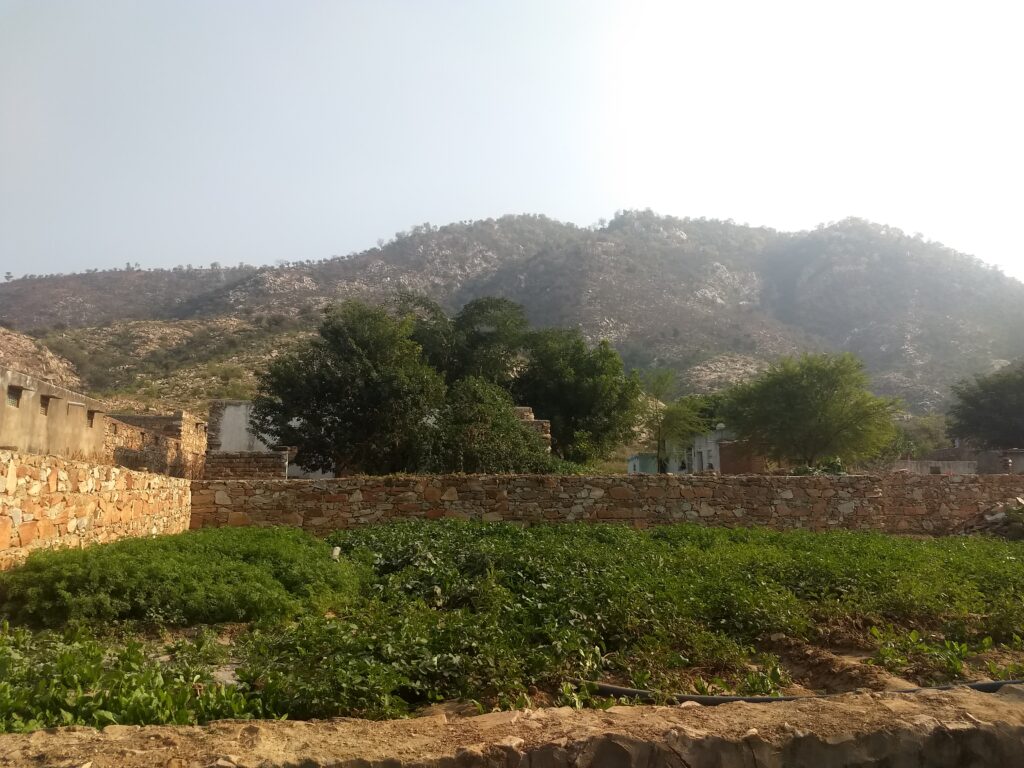
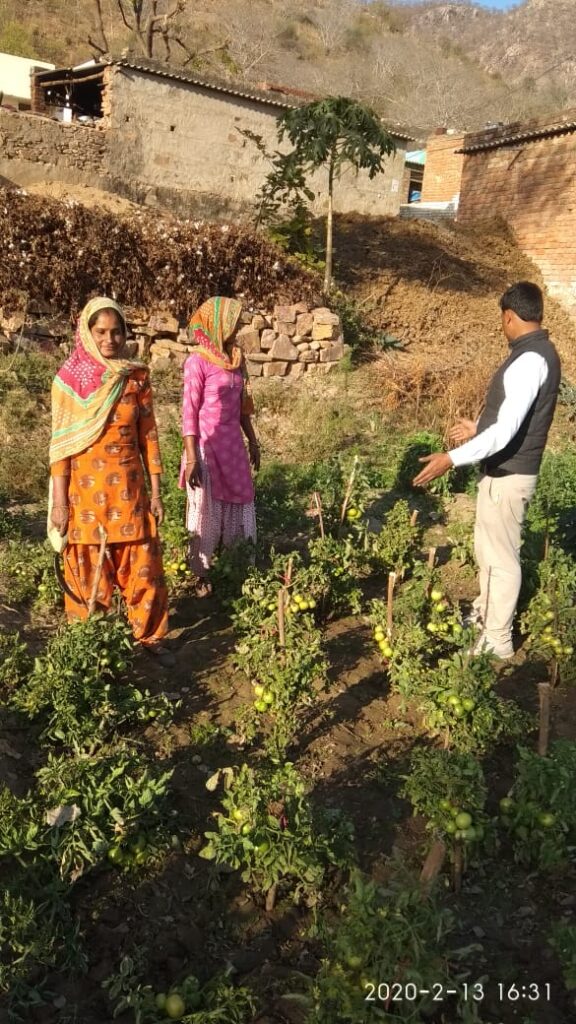
Kitchen Gardening is practiced worldwide, and is considered world’s most ancient food production practice. It is the most sustainable medium to get access to micronutrients, especially for poor households to combat food insecurity and have nutritional diversity. Establishment of Kitchen garden in rural area is easy, at the same time lead to great benefits, in terms of direct access to important nutrients that are otherwise not easily available or not within the economic reach. Spectra Organization, in its program, Integrated Livelihood Development Project (ILDP) took this profitable initiative as one of its project activities, realizing the benefit the backyard kitchen gardening can provide to the families. From improving the nutritional status of small and marginal farmers to adding substantially to the family income, kitchen gardening is a wholesome cost-effective approach.
Since ILDP aims to empower rural women holistically, providing attention to the improvement of nutritional status of these women and her family is considered very important. What better course of action than the approach of kitchen gardening, as it ensures a continuous flow of subsistence food products in the household diet, leading to decrease of diseases caused due to micro-nutrient deficiency. This helps the women to maintain a good health of her family, as well as has the potential to promote entrepreneurship. On our every visit to the Project area of ILDP, the women are always enthusiastic to show their kitchen garden. It brings them utmost joy and happiness to talk about how the garden has tremendously helped them in accessing nutritious food as well as provided an assistance in saving their money and add on to family income.
Spectra Organization have been distributing Kitchen Gardening Seeds since the initiation of this project (July 2020) to the women in the SHGs. The kit consists of 12 types of vegetable seeds which are Methi, Singri, Dhaniya, Radish, Mustard, Rai, Carrot, Matar, Salgam, Palak, tomato and Bottle Gourd. The distributing of the kit is carried out in Kishangarh Bas and Umrain Block of Alwar District of Rajasthan. The cost of one vegetable seed kit is Rs 100. So far we have distributed 350 kit reaching 350 families. This approach has led to saving Rs 50 per day for each family on average, summing upto saving of approximately Rs 1500 per month per family.
Phul Bai, a beneficiary of the initiative from Dadikar Village of Umrain Block of Rajasthan says, ‘I have been providing nutritious food to my family ever since team spectra have guided me to establish the kitchen garden at my Backyard. It gives me utmost pleasure to provide my family fresh vegetables right from the plants. Apart from being able to have nutritious filled vegetables, I have also managed to save some money, as I don’t have to often use money in buying vegetables. Moreover, I am glad that anybody coming to my house would not go away without having a meal from my kitchen garden. I also have a shop where I sell surplus produce occasionally’. Another Beneficiary, Pinki ji, from Nangalmojiya, Gram Panchayat Sainthli, who has been a member of Prachi SHG says, ‘we are highly benefited from the Kit as it provides us seeds of diverse vegetables in just Rs 100. It is cost effective and a great source of accessing micronutrients. The vegetables grown are chemical free, much healthier than the market. Even during the times of Lockdown, we did have access to nutritious food’.
All the households, who are beneficiaries of Kitchen Garden initiative under the ILDP project use organic method of cultivation including organic manure. With less dependent on chemical fertilizers, the produce from the kitchen garden makes it an environment friendly approach too. Moreover, the waste from the kitchen as well as animal waste is used for enriching the soil quality, making it eco-friendly and sustainable way of vegetable production. Kitchen gardening indeed provides a way for these rural women to strengthen the nutritional input in their families. By taking this approach of sustainable way of organic vegetable production, family health as well as food security has been enhanced.